Saturday, July 3, 2021

14th Sunday in Ordinary Time

Ez 2:2-5

Ps 123:1-4

2 Cor 12:7-10

Mk 6:1-6


What was the thorn in Paul's flesh?  The second reading raises many questions. It supplies no answers. What was that nagging irritation that kept Paul from being too elated?  What bothered him so much that he likened it to being beaten by an evil spirit?  Don't bother trying to look up an answer. There is no agreement among scholars from Augustine to the present. The hypotheses cover a wide range including physical ailments such as eye disease, recurrent kidney stones, and migraine.  St. John Chrysostom wondered if the thorn was the unending criticism and persecution by Paul's opponents who made his struggle to preach the gospel of the Lord difficult. Some commentators suggest temptations to power, pride, and even sexual lust.   Others wonder if it was the burden of realizing that he was a sinner. Perhaps he was haunted by the guilt for persecuting Jesus' followers or his silent assent to Stephen's martyrdom. The possibilities are endless.  In the end any of our answers or suggestions as to the nature of the thorn will say more about us, and the thorns that dig into our flesh, than they do about Paul. 


How often do we cringe at a memory or wish we could forget how we hurt another?  How often have we given into temptation only to be overwhelmed by guilt afterwards?  The challenge is two-fold: first, to recognize the nature of the thorn that causes our distress, and second, to figure out what we need to do to remove it.


The last verse of the first reading from the Book of Ezekiel is fascinating.  While giving Ezekiel his mission God warns him that it won't be easy, that not everyone will heed the prophecy.  BUT . . . "whether they heed or resist they shall know that a prophet has been among them." This statement is reflected in the gospel.


Whether the people of Jesus' native place listened or closed their ears to the message of this local kid, they all knew there was something different about him.  How else to account for their reactions?  They might not have used the word prophet but there was something they couldn't figure out and, for most of the crowd, couldn't or wouldn't accept. 


The gospel exposes some of the most satisfying yet self-destructive of all sins: smugness and prejudice.  In his commentary on this passage, the late Jesuit scripture scholar, Father Dan Harrington described the crowd’s attitude as the “prejudice of familiarity.”  


Smugness is defined as self-righteous complacency, conceitedness, and even pompousness.  It is closely related to the prejudice of familiarity.  It is the driver behind virtue-signaling. 


Smugness leads some of us to hear this gospel and settle in comfortably with the assumption that: had Ibeen present at this scene I never would have criticized Jesus for being a local kid come back years later.   Inever would have felt that Jesus was the boy from down the street who is so full of himself.  In reality the odds are high that had many of us been standing with the crowd we would have said or felt the same things.  We would have joined in the chorus of disapproval: 


“just who does he think he is?”

“where did that son of a carpenter get all of this?”  

"a little too big for his britches if ya' ask me."


Self-righteousness uninformed by facts can damage relationships with our community, our work, our family life, and just about everywhere else.  Of course, at times we must be skeptical about the new prophet on the scene. There are many charming and convincing sociopaths wandering among us wearing the mantle of prophet.  The dangerous hypocrisy of Elmer Gantry, in the book and movie of the same name, has haunted me for over twenty years. The revival preacher was a conniving shill. 


It is a challenge to first recognize and then heed the “prophets” who live among us, the teachers in our families, the experts about whom we think 

"I remember him when . . . " 

"I remember when she was . . ." 

"I won't believe anything he says, he is a __________

(fill in the name of the political party you most despise)"  

Human nature has not improved in the two millennia since Jesus' birth. 

I'm not optimistic that it will.


Destructive prejudicial pride and smugness cause us to exert premature closure on something we may need to hear.  They are the primary drivers of "cancellation culture" one of the most terrifying trends in the U.S.  Sometimes it is a relief to realize I am much closer to death than to middle age, as some days it seems we are reliving the reign of Jiang Qing, aka Madam Mao Zedong, and her Red Guard, reeducation camps included in the name of sensitivity training and its spawn.  Sometimes it is a relief to realize that as I move through my early seventies I am much closer to death than middle-age.


Smugness causes us to reject truth out of hand simply because we know the messenger or at least know about the messenger.  The prejudice of familiarity and smugness remain particular risks today in society, in families, among coworkers, and for some of us, in our religious communities.


With apologies to Walt Kelly and his most famous Pogo cartoon strip: "We have met the faithless people and they are us." 

____________________________________________


There was no homily last week as I was at the Abbey of Regina Laudis in Connecticut.  A Chinese priest friend was with me.  I asked him to preach on two of the four days we were there.  Sunday was one of them.  He is an excellent preacher.   Will go back down to the Abbey at the end of this month, alas without Father who has other commitments for that weekend.  


The photos are from Mt. Equinox in Manchester, VT.  One of the best venues I've ever been in for landscape photography.  


Raindrops on roses, daisies, and leaves is one of the most cliched of all photos on photographer web sites.  But it is also fun.  So, I continue to shoot.


The storm clouds to the northwest were ominous.  The light was exquisite.


These were shot in August as the apples were ripening  It takes a little longer at 2600 feet elevation.


One of several lakes on the land. 


The lake is near the guesthouse in which I stay.   Eas to get to any time, unless the dirt road is replaced by mud. 


The Carthusian Motto.  Stat Crux Dum Volvitur Orbis in Latin.


Took this shot in the rain.  The EM1 mk ii camera body is weatherproof.  

+ Fr. Jack, SJ, MD

Saturday, June 12, 2021

Mustard Seeds, Kielbasa, and Faith: Homily for 11th Sunday of Ordinary Time

Ez 17:22-24

Ps 92

2 Cor 5:6-10

Mk 4:26-34


The Bible is many things.  It is a history of the world and a collection of biographies.  It is a rule of life that balances prescriptions and proscriptions, the thou shalls and thou shall nots.  It instructs us in how to respond to God's love and how to treat others.  The psalter is the prayer book that links us to David and to Jesus, both of whom prayed the same psalms we pray today. It is a source of moral teaching and a textbook of faith.  The Bible is also an exquisite form of literature that will never be surpassed.  


Both Testaments use images and multiple literary forms to transmit the rule of life, to teach the prayers,  to model the moral instruction, to make plain the history, and narrate the biographies, in ways that make them indelible and eternal.  


Today's readings, including the psalm,  define and instruct us in the simultaneous simplicity  and complexity of faith using the image of the tree.


Trees supply shade and produce food. They are sources of fuel and things of great beauty;  that beauty is particularly apparent during a New England autumn.  In the deserts of the Ancient Near East the tree marked places where water allowed life to flourish. It is no accident that the tree became the symbol of life. 


The cedar in the Ancient Near East grew to over 125 feet tall and at times twice that. It was a symbol of strength, it was a sign of God's creation. It was a place of safety for the birds that took shelter in its branches, and a place of refreshment for those who sought relief from the heat under its branches.  It was truly a tree of life.  All from a small shoot planted by God on a mountaintop.


Many of Jesus’ parables turn on the question of faith,  how it is nurtured and strengthened; how it directs, or should direct, our lives, how, though given freely and without cost, it requires care and attention if it is to flourish, grow, and continue to sustain us.  Nurturing our faith and living according to that faith is the path to the eternal life promised by Jesus' act of self-surrender.  Like the care of a shoot planted in the ground nurturing faith requires our involvement on a daily basis with prayer, meditation on scripture, and frequent reception of the Eucharist..  


Jesus tells us in both of the short parables in today's gospel that once the seed of faith is planted, it germinates and grows and, when cared for, becomes what it is meant to be.


In the first parable the seed grew though the farmer could not describe how.  Despite being unaware of the early stages of growth, the farmer trusted that it would grow.  And, with time a small seed buried in the ground, nurtured, weeded, and cared for, led to the mature plant of ripe grain ready for harvest.


At only one or two millimeters, or 1/25th of an inch, the mustard seed of the second parable is best described as tiny. 


When I was in high school in the middle of the previous century, Catholic girls wore either a crucifix or a Miraculous Medal around their necks while Protestant girls wore necklaces with crosses or a small crystal globe with a tiny and barely visible mustard seed in the center.  Despite its diminutive size, the mustard seed grows into a very large bush that, while technically not a tree, can grow up to twenty feet high with a twenty foot lateral spread, easily serving as a dwelling for birds and a source of shade and comfort, to say nothing of the many uses of the mustard seed itself--which includes its use as an essential ingredient in truly prime kielbasa.


Just as it takes a long time and favorable conditions for the mustard seed to grow from 1/25th of an inch to twenty feet so it is with faith.  


As we live our faith, cultivate it, and attend to it through prayer, reflection, meditation on scripture, regular confession, and frequent reception of the Eucharist, it matures.  


There are periods of doubt and questioning, particularly when life becomes difficult and dark, or when the situation demands more than we think we can ever give. But, just as we speak of the growing pains of youth, the struggles leading to mature faith are a necessary to our spiritual lives.


As we persevere through difficulties, challenges, and resolve doubt our faith becomes stronger, more resilient, and more able to sustain us.  As our own faith is strengthened through trial it allows us to sustain those whose faith is weak, it allows us to be a shelter for those who need to rest in the branches of our faith when theirs is shaky.  


Paul writes in the Second Letter to the Corinthians,  "We walk by faith, not by sight."  That is the faith of the farmer who plants the seed but sees nothing until it has germinated, taken root, and begun to grow.  Faith is perfectly explained in the Letter to the Hebrews as: "the realization of what is hoped for and evidence of things not seen."  Through the eyes of faith we come to see the cross as the tree of all life.  Only through the eyes of faith can we see the cross as the tree through which we were granted salvation and forgiveness of sin. 


The cedar of the first reading, the palm tree of the psalm, and the tree that grows from the tiny mustard seed,  all remind us of the prophecy to restore the House of David.  A prophecy fulfilled through Jesus' obedience to the Father, who, through His death on the cross on the tree of life, defeated death forever.  

_______________________________________________________________

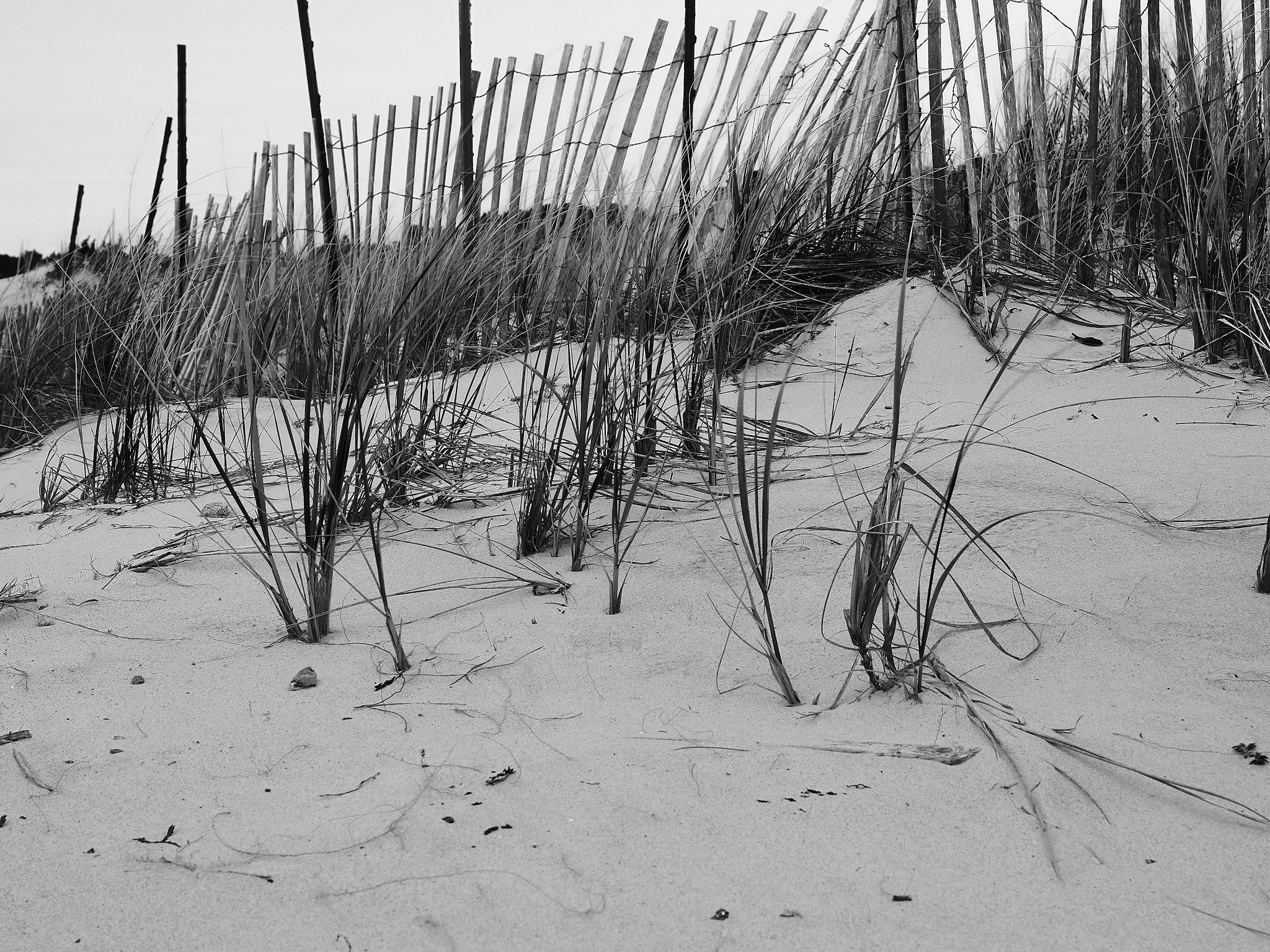
The photos are from Horseneck Beach near Westport, MA, a town that sits on the border with Rhode Island.  Have gone down there on rare occasion, usualy in the off-season, to cover Mass.  Made a few trips to the beach while staying at the rectory.  The beach is a state park with no diversions such as restaurants, boardwalks, souvenir shops, or other forms of pollution.  


+ Fr. Jack, SJ, MD

Sunday, June 6, 2021

The Solemnity of The Most Holy Body and Blood of Christ (Corpus Christi)

Ex 24:3-8

Heb 9:11-15

Mk 14:12-16, 22-26


In 2007 the Solemnity of the Most Holy Body and Blood of Christ, or Corpus Christi, was on Sunday June 10.  The Boston weather that day was as good as it ever gets: blue skies with scattered puffy clouds, pleasantly warm with low humidity, and a nice breeze; the true perfection of early summer in New England.  I remember these details and many others because it was the morning on which I celebrated my first Mass at Campion Center, just twenty-four hours after being ordained by Cardinal O'Malley at St. Ignatius.  Thus, today begins my fifteenth cycle of preaching through the lectionary. 


Solemnities such as this one, the Solemnity of the Holy Trinity that we celebrated last week, and a few others, are different experiences compared with those such as Christmas, Easter, or the Ascension.  They are different because they commemorate a mystery rather than an event.  Christmas, Easter and other feasts commemorate and celebrate specific moments and episodes in our history as Church and as a people.  Each has a narrative flow and a cast of characters. The story can be told and retold.  We can imaginatively place ourselves in the action and participate in that history.  We can close our eyes and see the events unfold. This form of synthetic contemplation is the method Holy Father Ignatius used in his Spiritual Exercises.  


Today however, unlike Christmas, the Resurrection, the Transfiguration and other events, we find ourselves contemplating a mystery of our faith.  Not only 'a' mystery of our faith but, along with the mystery of the Trinity, a central mystery of our faith; the mystery of the Real Presence of Christ in the Eucharist.  We contemplate the gift of Christ, truly and substantially present in our midst in the sacrament.  


It is overwhelming to consider the reality of Christ present in the bread and wine we receive at communion. It is daunting to consider that the Body and Blood of Christ is present in the tabernacle.  Alas, for many too many, the real presence of Christ in the Eucharist is a stumbling block. They can understand symbol.  They can understand sign.  They can even understand metaphor and simile.  But, they can’t understand real. Or perhaps they simply refuse to accept it. 


Each of today's readings remind us of that presence. In an appalling statistic, the majority of American Catholics do not believe in the real presence of Christ in the Eucharist.  Much of the fault for that lies in the laps of priests, deacons, and religious educators who fail to preach and teach this central truth of Catholic faith. 


Historically, blood is the ultimate seal on a promise. The imperfect sacrifices of dumb animals sealed the covenant God forged with Moses.  For this reason, we heard in the first reading how the people vowed, "All that the Lord has said we will heed and do"  as Moses sprinkled them with the blood of dead animals. In the second reading we hear of the perfect sacrifice of Jesus who shed His own blood, "He entered once for all into the sanctuary . . . with HIs own blood, thus obtaining eternal redemption." Through his Body and Blood, Jesus is mediator of the new covenant that delivered us from the transgressions under the first covenant and that deliver us from sin.  


A priest need say little by way of comment on today's gospel. It would be absurd to gild this particular lily that narrates the institution of the Eucharist.  We will hear Jesus' words in the formula of institution at the consecration in just a few minutes.  Listen carefully.  We don't hear 'this is a symbol of my body' or 'this represents my blood' or other such Mary McCarthy-like silliness.  Rather, we hear, 


"This is my body." 

"This is my blood."  


words that underlie the great mystery that Flannery O'Connor described in a letter as, "the center of existence for me; all the rest of life is expendable."


Today we recall that great gift of the Body and Blood of Christ.  Real.  Substantial. And truly present.  Once we recall that mystery we can only stand in stunned silence and profound gratitude.


My choice for the post-communion hymn at that first Mass fourteen years ago required no thought or decision-making. It was almost too easy. The hymn was custom-written for this feast by Aquinas centuries ago.  


Panis angelicus
fit panis hominum;
Dat panis cœlicus


Thus Angels' Bread is made
the Bread of man today:
the Living Bread from heaven


That Living Bread is true, it is substantial, and it is real.  We need not parse it any further.  We need only receive it with reverence, faith, and deep gratitude.  

_________________________________________

I took the photos of the Chapel of the Holy Spirit at Campion Center in Weston, MA at the request of the former superior who wanted high-resolution shots that he could blow up. The Olympus EM1 mk ii has a function that can create a 50 mp photo. It is a tricky process, requires a tripod, a trigger, and a lot of patience to get the settings.
On 14 August 1999 I pronounced first vows kneeling in front of that altar as Fr Provincial held the Body and Blood of our Lord in front of me. On 10 June 2007 I celebrated my first Mass behind that altar on the Feast of Corpus Christi. On 1 October 2013, once again kneeling in front of the Body and Blood or Our Lord, this time held by Fr. General Adolfo Nicolas, I pronounced final vows. Though the date is unknown, my coffin will lie in front of that altar for the requiem Mass before being taken a few hundred yards down the hill for burial among my Jesuit brohers.


+ Fr Jack, SJ, MD


Sunday, May 30, 2021

Requiem Aeternam: A reflection for Memorial Day

31 May 2021


The first commemoration of those who died in war was held in Boalsburg, Pennsylvania in October 1864. That long ago first memorial ceremony was held in a cemetery near what is now the intersection of US 322 and PA 45, a few miles south of Penn State University which had been founded only nine years earlier. 


It is unlikely that the three women who gathered others for that observance, one of whose son was killed and another whose father died in the civil war, foresaw that it would become a national holiday. 


Many Americans of a certain age remember and perhaps use the old term: Decoration Day.  My mom always referred to it that way even after it was officially renamed Memorial Day.  It was, and should be, a time to visit graves and war memorials, to place flags and flowers on the graves of the war dead, to attend public commemorations of the sacrifice made by men and women whose lives were prematurely ended, and, at least in Catholic cemeteries, a time to place candles in memory of the men and women who died in the service of their country. 


Memorial Day is a time to ask why?  The question is not 'why does war happen?'  War is a built-in feature of humans; the world will never be free of war any more than it will be free of sin.  Rather, we ask why men and women voluntarily risk their lives to defend that which they, and we, hold sacred. It is a time to wonder what it was like--and is like--to stand at the induction center, an eighteen year-old high school graduate or a newly minted nurse, being sworn into the military, knowing that he or she might not return.  Today is dedicated to the memory of those who didn't return.  There are more reasons why men and women are willing to risk and lose their lives than there are men and women in the military.  No matter the reason, the only response we can offer to those who lost their lives defending our country is gratitude, honor, and prayer.


Memorial Day should not be a day dedicated to automotive deals, clothing sales, cookouts, or that first weekend on the Cape or, for those of you from Pennsylvania, "Down da Shore."  All those things have their place. However,  it is critical that we keep our eyes and hearts fixed on the true meaning of, and reasons for, this day; to honor the memory of those who died protecting us. 


And, as we pray for those men and women, we also pray for their families whose lives were upended and irrevocably changed by their deaths.  The Gold Star mothers.  The dads who never got to play catch with a son or daughter again.   The many who were forced to make pilgrimages to foreign soil to visit the grave of a parent, a sibling, or a best friend buried there, and for those who never knew for sure, and will never know for sure, where a loved one's body is or if it was even buried.  


Be it standing at the Tomb of the Unknown Soldier, the Vietnam Memorial, or the memorial to the War dead in front of where Plymouth High School once stood, the only possible response is to remember, to thank, and to pray: 


Requiem aeternam                      

dona eis, Domine, 

et lux perpetua luceant eis. 

Requiescant in pace. 


"Eternal rest 

grant unto them O Lord, 

and let perpetual light shine upon them. 

May they rest in peace."


Amen


+ Fr. Jack, SJ, MD


Saturday, May 29, 2021

In the Name of the Father: Homily for the Solemnity of Holy Trinity

Dt 4:32-24, 39-40

Ps 33:4-5,6,9,18-19, 20,22

Rom 8:14-17

Mt 28:16-20


The Solemnity of the Most Holy Trinity compels us to consider the most important truth of our faith. We recall this truth every time we begin and end Mass.  We invoke the Trinity every time we pray.  We call upon the Trinity whenever we say the words:  Father, Son, and Holy Spirit.  What we call the Trinitarian formula is critical to every sacrament we celebrate from baptism to the anointing of the sick and dying.  The sign of the cross with the Trinitarian formula begins and ends everything the Church does.  As it should.  We read in The Catechism of the Catholic Church, “Christians are baptized in the name of the Father and of the Son  and of the Holy Spirit. "


Catholics are NEVER to be baptized by a priest using the bizarre formula: in the name of the Creator, the Redeemer and the Sanctifier as those of a certain persuasion would like.  Indeed, if that formula is used for baptism it is invalid and the child must be baptized again.  This is as it should be. 


The Catechism continues,  "The mystery of the Most Holy Trinity 

is the central mystery of Christian faith and life. It is the mystery of God in himself. . . .It is therefore the source of all the other mysteries of faith . . . (It is) the light that enlightens them. . . . It is the most fundamental and essential teaching in the hierarchy of the truths of faith.”  Every time we make the sign of the cross, we recall a mystery that is inexplicable. The Trinity remains inexplicable despite the vast number of books written about it.  Though each book may contain a bit of insight into the nature of the Trinity, no book captures the essence of the Trinity.  No book, or the sum of all books, will ever capture that full essence.  In the end, the dogma of the Trinity depends on faith and faith alone. 


A dictionary defines faith as:  “Belief that does not rest on logical proof or material evidence.”  That definition complements the one from the Letter to the Hebrews: “Faith is the conviction of things unseen.”   We must become comfortable with the definition of faith as mysterious because despite the absence of logical proof, despite the impossibility of philosophy or science  to explain the Trinity, one cannot call oneself Christian if he or she denies the Trinity.  Father.  Son.  Holy Spirit.


Many of you probably heard the legend that I did back in grade school a lot of decades ago.  It still serves to illustrate the impossibility of understanding the dogma of the Trinity. 

The great theologian and philosopher St. Augustine was walking along a beach trying to understand One God in Three Divine Persons.  He wanted to explain the Trinity through logic.  He noticed that a little boy had dug a hole in the sand and was walking back and forth between the water and the hole with a seashell filled with seawater.  He would fill the shell at the water’s edge and then empty it into the hole in the sand.  Augustine observed this for a while and then moved closer and asked what he was doing.  The boy responded that he was emptying the sea into the hole.  Augustine asked how he could expect to empty something as vast as the sea into a small hole?  The child responded, “I can empty the sea into this hole more easily than you can understand the Trinity.”  


Only through faith can we understand some things that our inadequate intelligence will never be able to comprehend. Even if we were to comprehend the Trinity, the limits of human vocabulary, the ultimate emptiness of all languages, the pallid nature of similes and metaphors, would not allow us to explain it in a way that others could understand.


The word Trinity does not appear in the Bible.  Rather, the understanding of the Trinity grew as the Church began to consider what Jesus had said and done during His time on earth. The doctrine of the Trinity is the doctrine that in the unity of God there are three Persons, the Father, the Son, and the Holy Spirit. There is only One God–-yet the Persons are distinct. Thus, Jesus always speaks of His Father as distinct from Himself, yet He also notes that “I and the Father are One.”  The same is true of the Holy Spirit.


Over the past weeks many of the gospels have come from Jesus' farewell discourse in John’s Gospel in which Jesus refers to both the Father and the Holy Spirit in reference to Himself several times throughout this farewell.  


The Trinity is, and will remain, a mystery forever.  The oft-repeated doxology: "Glory be to the Father, and to the Son, and to the Holy Spirit, as it was in the beginning, is now, and ever shall be; world without end.  Amen" reaffirms the fundamental truth of our faith. 


It can also fuel hours of contemplation. 

_____________________________________________________


The photos below are from the recent retreat we gave at Cohasset on the South Shore.  Black and white is my first love in photography.  The first several rolls of film I shot back in 1977 were black and white.  when I went to England most of the shots were also black and white.   


+Fr. Jack, SJ, MD

Saturday, May 22, 2021

Come Holy Ghost: Homily for Pentecost

Acts 2:1-11

Ps 104

1 Cor 12:3-7,12-13

Jn 20:19-23


"Come Holy Ghost

Creator blest

and in our hearts 

take up they rest"


The hymn we all learned in childhood is a free translation and paraphrase of the ancient "Veni Creator Spiritus"  'Come Creator Spirit,' thought to have been composed by a German monk in the ninth century.  It has been set to music in various languages by many composers over the twelve centuries since, with a range of styles from Gregorian chant to somewhat dissonant twentieth century approaches.  Most shocking is the use of the last verse as the final words of the opera Dialogues of the Carmelites.  They are sung by Sr. Blanche as she ascends to the guillotine to face her death simply for being a nun of the monastery.  It is one of the most devastating scenes in all of opera.  


The second reading in the office of readings yesterday was part of a sermon by an anonymous sixth century African who wrote, "The disciples spoke in the languages of every nation . . . whoever received the Spirit spoke in every kind of tongue."  Today the Church speaks in the language of every nation as she embraces the languages of the people.  In that sense Catholic Church speaks in tongues to all peoples at all times.


One hears in theology school that one cannot understand the New Testament without first knowing the old. This is particularly true of Pentecost which is not a uniquely Christian term or feast though the meaning of Pentecost for us is different than is Pentecost in the Jewish tradition. 


Pentecost derives from the Greek root meaning fifty days.  The Jewish Pentecost, also known as Shavuot, commemorates Moses receiving the Ten Commandments fifty days after the Exodus.  In the Jewish liturgical year Pentecost falls fifty days  after the first seder of Passover. This year Shavuot began Sunday evening May 16 and ended two days later on Tuesday May 18.  


In the Catholic liturgical year Pentecost falls fifty days after Easter, with Easter Sunday counted as day number one.  Just as Moses received the wisdom of the Decalogue fifty days after the Exodus from Egypt, the disciples, and by extension the Church, received the wisdom of the Holy Spirit fifty days after Jesus’ resurrection, His exodus from death. 


The first reading is dramatic. Wind.  Fire.  Speaking in tongues. A shocked populace hearing the poorly educated and unsophisticated Galileans speaking whatever language was necessary to tell the city's many visitors the Good News of Jesus.  Scholars sometimes refer to the speaking in tongues as “the reversal of Babel,” the undoing of the event that caused the earth's multiplicity of languages, a multiplicity that is a source of division among the peoples. That division and the periodic conflicts that result from it will remain,  no matter how many COEXIST bumper stickers travel the highway.  


At Pentecost, that which had been split apart  by man's pride at Babel was rejoined through Jesus’ humble obedience to the Father in Jerusalem.


Upon the descent of the Holy Spirit, that which had been shattered by hubris, was reformed through Jesus' sending of the Holy Spirit.


The reading from Paul's First Letter to the Corinthians is important because emphasizes both the unity of believers and the diversity of gifts which they receive, the diverse talents that each possesses and, by implication, those talents and abilities which each does not possess.  


Paul wrote, “To each individual the manifestation of the Spirit is given for some benefit.”  We celebrate those manifestations today, we celebrate those gifts of the Spirit.  Each of us is given gifts in various combinations.  These gifts are neither identical to nor interchangeable with the gifts given to anyone else.  A major life task is to discover our unique gifts and develop them.  


In some strata of American society it is fashionable, if not required, to deny even the possibility of differences and distinctions, abilities and inabilities, talents and complete lack of talent.  The reality is, however, that no one can be anything he or she wants to be simply by wanting it. It was never true.  It will never be true.  No, we are not all equal in ability, talent, intelligence, or anything else.  


Some in government and society go so far as to deny fundamental biological differences with delusional intensity, demanding that others buy into that delusion at the penalty of job loss or other draconian penalties. The result of denying differences in the name of equality results in a bizarre pseudo-equality that is a malignant form of exclusivity. This pseudo-equality fuels a heightened sense of specialness.  As a result each individual or group insists that his, her, or the its specialness must be recognized as the most special of all specialness. 


Med school professors oftentimes share parodies regarding the body during anatomy or physiology class. The general outline is an argument among organs or body parts about which of them is the most important,  arguing among themselves which is the supreme controller, which is the MOST critical to the life, comfort, and survival of the organism.  But, except for the appendix, an organ of sorts that does appear to be useless, there is no most important organ.  All of the body's organs are equally necessary.  Each has unique functions that cannot be replaced by another.  The lungs cannot do the work of the liver.  The liver will never do the work of the heart. The pancreas cannot replace the kidneys.  If one organ or organ-system fails the body dies as one by one the other organs and organ systems fail.  


No one can become anything he or she wants to be simply by wanting to be that thing or pretending to be it. No one can become something simply by "identifying" as it.  We all live within realities that are chromosomal, physiological, psychological, and cognitive among many others.  Some of these limits are inborn others are acquired.  We all have strengths and abilities.  We all have weaknesses, inabilities, and disabilities. It will never not be so. The only true equality, the exclusive lowest common denominator among humans, is that we are sinners. We are sinners loved by God, but, sinners nonetheless. We can never afford to forget that. 


The gifts and graces of the Holy Spirit have been bestowed upon us. Our first task is to cooperate with them in the manner to which each of us is called. The second task is to use those gifts and graces to share the revelation of Jesus with those whom we meet using whatever language necessary.

____________________________________________


Sometimes I shoot pics of things that simply catch my eye.  This kind of photography is possible only when alone and in the right mood.  Any number of things may shout 'Shoot me, shoot me.'  So I do. 


All three of these were shot on the same Sunday morning, fairly early in the day, while wandering the streets of Ljubljana in July 2018.  


Without the two turquoise vases shouting out this photo never would have happened. 


A tired symbol of modern life:  the satellite dish

The flowers in window boxes drove this photo.

+ Fr. Jack, SJ, MD

Saturday, May 15, 2021

Love Makes the World Go Round

 7th Sunday of Easter 

Acts 1:15-17, 20a, 20c-26

Ps 102

1Jn 4-11-16

Jn 17:11b-19


Thursday we celebrated the Ascension of Our Lord on Thursday marking forty days after Jesus’ resurrection.  One week from today we will celebrate the Feast of Pentecost and the descent of the Holy Spirit.  We have celebrated the full Glorification Event of Jesus, from His birth, to His death, resurrection, and ascension into heaven.  The day after Pentecost we will resume ordinary time which will continue throughout the summer and most of the autumn until the new liturgical year begins on November 28th the first Sunday of Advent.  


During the fifty days after Easter we heard of the coming together of the community that believed Jesus to be the Messiah, the Promised One, the Christ.  We read a few weeks ago:  “It was an Antioch that they were first called Christians.”  At no time in the history of the world since then have there not been those who are called, and who call themselves, Christian.  It wasn’t always smooth. It still isn't. Sinful human nature raised its head more than once in the history of the early Church.  As it continues to raise its head today. That too is unlikely to change.


In today's reading from Acts we see Peter coming into his own as leader of the Church, the rock upon which the Church was built.  It was necessary to choose a man to take the place of Judas, the suicide.  Rather than a contentious campaign or vetting possible replacements by a committee of apostles, Peter opted to flip a coin to determine who, between two men, would  take that place.  The coin toss favored Matthias whose feast we celebrated on the 14th. 


The second reading from the First Letter of John begins with a difficult mandate.  “Beloved, if God so loved us, we also must love one another.  . . . if we love one another, God remains in us, and his love is brought to perfection in us.”


“We also must love one another.”  


There is nothing unique about the commandment to love. There is nothing specifically Christian about the command to love others as you love yourself.   All of the world’s great religions have some variation of  what is called the Golden Rule to love others, to treat others as you yourself wish to be treated, to do unto others as you would have them do unto you. Nothing about that commandment makes it uniquely Christian. 


As the late Jesuit scripture scholar  Father Stanley Marrow explained in his commentary, “loving with . . . utter selflessness, even to laying down of one’s life, is not uniquely Christian.  What . . . must distinguish Christians is:  when they love, they love as Christ loved them and because he loved them.”  We can appear to love others for many reasons.  But only when we love because Jesus loved us, can we truly say we love. Father's commentary is a welcome antidote to the appalling post-Vatican II song--one cannot call it a hymn--"They Will Know We Are Christian By Our Love"-- a song with a thumping beat, a hilariously simple-minded chorus, and narcissistic lyrics, one would assume love is a copyrighted characteristic of Christianity.  It is not though self-adultation certainly comes through in the lyrics.


John's Gospel is fascinating and, at times, challenging to read.  John gives us a unique understanding of Jesus, a unique Christology, compared with Matthew, Mark and Luke.   John focuses on the meaning of the events of Jesus' life for our salvation. The Gospel reading today was the last half of chapter 17 of John's Gospel a chapter is sometimes referred to as the High Priestly Prayer. 


It  is unique because there are no parables, stories, discourse, instruction, or dialogue with the apostles.  The chapter is one long prayer from Jesus to the Father as he prepares to enter into his passion.  It is a chapter worth reading slowly at home.  It is deserving of prolonged meditation.  


As the second reading challenges our concept of love the Gospel challenges our relationship with the world. “I gave them your word, and the world hated them because they do not belong to the world . . . I do not ask that you take them out of the world but that you keep them from the evil one”


We cannot afford not to be in the world.  Nor can we afford to be OF the world.  


We can only remain in God, we can only remain in love, if we live in accordance with God's Word.  We can only remain in love if we preach the Gospel of Jesus on a constant basis, and necessarily by what we say.  We may be more effective when we live according to the Gospel and preach that Gospel to all whom we meet through our actions, using words only when needed.  


___________________________________

Some night shots from Ljubljana, Slovenia.  One of the great advantages of being there was that our community was a short and very safe walk from the center of the city (the two safest cities I've ever lived in have been Taipei and Ljubljana.  Midnight photography was completely anxiety free.  No way in hell would I go to do night photography in D.C.).


Looking down on a floating dock/bar in the Ljubljanski river.

Black and white is a perfect medium for night photography  Much more latitude in the processing than with color.

Have been fascinated for a long time with shooting glass, especially when illuminated by candle light. 

Ljubljanski Grad (castle) overlooking the river  The castle was part of the view from my tiny room at the SJ house.  

Vodnikov Hram restaurant.  Good food.  Excellent photo subject. 

+Fr. Jack, SJ, MD